
News
News and calls
Erasmus+
Erasmus+ is the main framework for international mobility of FPZ students and staff. It covers study exchanges, traineeships, and related short- and long-term mobility formats.
The detail page contains eligibility rules, mobility types, recognition guidance, ECTS coordination, and practical pre-departure information.
Erasmus BIP
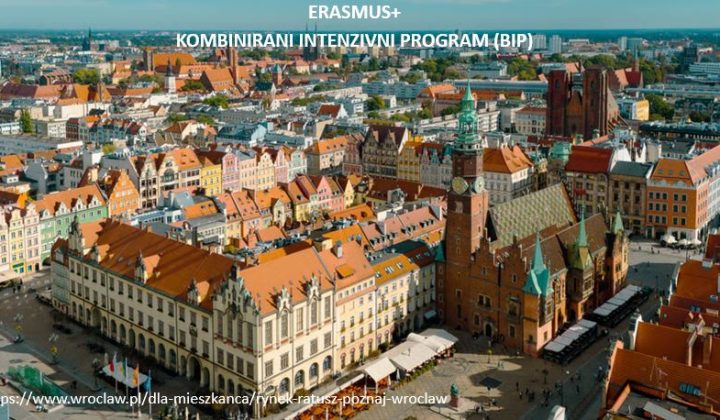
Erasmus BIP (Blended Intensive Programme) combines a short physical stay with a virtual component. It is intended for students and staff who want to gain new knowledge and international experience through an intensive format.
The detail page contains current BIP programmes and the core participation guidance.
CEEPUS
CEEPUS is a regional academic mobility programme focused on cooperation between higher-education institutions in Central Europe. Through it, FPZ supports mobility for students, teaching staff and non-teaching staff, both within networks and through freemover applications.
The detail page provides calls, mobility formats, and guidance for outgoing students and staff.
UNIC
The University of Zagreb is part of the European University of Post-Industrial Cities – UNIC. The alliance brings together eight European universities with the aim of strengthening staff and student mobility and developing an inclusive post-industrial society.
Alongside the University of Zagreb, the UNIC alliance includes:
- University of Deusto in Bilbao
- Ruhr University Bochum
- Koç University in Istanbul
- Erasmus University Rotterdam
- University College Cork
- University of Liège
- University of Oulu
The alliance is coordinated by Erasmus University Rotterdam, while the University of Zagreb project coordinator is the Faculty of Law.
Other programmes
The mobility portal also points to other exchange formats and University of Zagreb calls beyond the main programme lanes.
- IAESTE – international exchange of students in natural and technical sciences
- More information on student exchange at University of Zagreb level
- University of Zagreb calls
This block works best as an overview with external official exits, while specific open calls are published through the mobility news lane.
Horizontal mobility
Horizontal mobility allows students to enrol, during their home study programme, in selected courses from other study programmes within the University that are not delivered within their home programme, while still receiving recognition of passed exams and earned ECTS credits.
This is an important part of modern university education because it lets students enrich their study pathway, align it with their own interests and professional goals, broaden knowledge and skills, and prepare more effectively for professional life.
Courses taught in English
| Course title | Study programme | Semester | Study level |
|---|---|---|---|
| Studij Aeronautika | Zimski | Diplomski studij | |
| Studij Promet | Ljetni | Prijediplomski studij | |
| Studij Promet | Zimski | Diplomski studij | |
| Studij Promet | Ljetni | Prijediplomski studij | |
| Studij Promet | Zimski | Prijediplomski studij | |
| Studij Promet | Zimski | Prijediplomski studij | |
| Studij Promet | Zimski | Diplomski studij | |
| Studij Promet | Ljetni | Diplomski studij | |
| Studij Aeronautika | Ljetni | Prijediplomski studij | |
| Studij Inteligentni transportni sustavi i logistika | Zimski | Diplomski studij | |
| Studij Inteligentni transportni sustavi i logistika | Ljetni | Diplomski studij | |
| Studij Promet | Ljetni | Diplomski studij | |
| Studij Inteligentni transportni sustavi i logistika | Zimski | Prijediplomski studij | |
| Svi studijski programi | Zimski | Prijediplomski studij | |
| Svi studijski programi | Ljetni | Prijediplomski studij | |
| Studij Promet | Ljetni | Prijediplomski studij | |
| Studij Promet | Ljetni | Prijediplomski studij | |
| Studij Inteligentni transportni sustavi i logistika | Zimski | Prijediplomski studij | |
| Studij Promet | Zimski | Diplomski studij | |
| Studij Promet | Zimski | Prijediplomski studij | |
| Studij Promet | Zimski/Ljetni | Diplomski studij | |
| Studij Inteligentni transportni sustavi i logistika | Zimski/Ljetni | Diplomski studij | |
| Studij Promet | Zimski/Ljetni | Diplomski studij | |
| Studij Inteligentni transportni sustavi i logistika | Ljetni | Diplomski studij | |
| Studij Promet | Zimski/Ljetni | Prijediplomski studij | |
| Studij Inteligentni transportni sustavi i logistika | Zimski/Ljetni | Prijediplomski studij | |
| Studij Promet | Ljetni | Prijediplomski studij | |
| Studij Promet | Ljetni | Prijediplomski studij | |
| Studij Promet | Ljetni | Prijediplomski studij | |
| Studij Promet | Zimski | Diplomski studij | |
| Studij Inteligentni transportni sustavi i logistika | Zimski | Prijediplomski studij | |
| Studij Inteligentni transportni sustavi i logistika | Ljetni | Diplomski studij | |
| Studij Inteligentni transportni sustavi i logistika | Zimski/Ljetni | Diplomski studij | |
| Studij Promet | Ljetni | Diplomski studij | |
| Studij Inteligentni transportni sustavi i logistika | Zimski/Ljetni | Prijediplomski studij | |
| Studij Promet | Zimski/Ljetni | Diplomski studij | |
| Studij Promet | Zimski | Prijediplomski studij |
Aerodromske operacije
Familiarize students with the principles of airport system planning and organization. Define and analyse the passenger/baggage, cargo/mail and aircraft ramp handling. Elaborate the correlation between airport capacity and delays. Establish principles of land use and environmental control
Analitika prometnih podataka
Teach students for critical analysis of problems in the domain of traffic and transport technology, and recognition of similarity, irregularities and patterns in data using known scientific approaches from the area of big data analytics with the use of software tools for solving those problems
Automatizacija u željezničkom prometu
The course aims to introduce students to the area of automation and its implementation in railway systems.
Baze podataka
Teach the student the basics of working in relational databases, which includes user
requirements analysis, working in a database management system, creating a
relational database and the basic use of the SQL language
Cestovne prometnice
To acquaint students with the stages of road design outside urban areas, from the study level in which the traffic projects are extremely important (traffic study), through the conceptual design of the road and implementation solutions that include equipment and road protection, to the user-use level that includes road maintenance and determination of the useful features of the road
Ekonomika prometa
Economy, economic, transport economics and their basic concepts and determinants. Economic growth conditioned by economic policy. Transport system contemporary determinants through the implementation of important systems theory phenomena, the interconnectedness of elements of the transport system and traffic interaction with his environment. The importance of transport policy, the structure of the transport system and the advantages of modern transport technologies, and the importance of cooperation transport sub-systems on the market of transport services. The ownership structure of companies specialized in the creation of optimal conditions for their management. Transport costs managing, basic criteria for their divisions, specific transportation costs, control operations, and performance indicators. Elements of the transportation infrastructure, operational infrastructure policy objectives and methodology for assessing the economic feasibility of the construction of transport infrastructure. Investment projects evaluation, their role, determining the costs and benefits of investment projects and methodology of selection of investment projects.
Engleski jezik za zračni promet III
Provide knowledge on all grammatical constructs and then practice them, practice reading, writing and translating, mastering the vocabulary in the profession
Engleski jezik za zračni promet IV
Provide knowledge on all grammatical constructs and then practice them, practice reading, writing and translating, mastering the vocabulary in the profession
Engleski zrakoplovni jezik 2
Enable students to acquire 4 basic language skills (reading, writing, listening, speaking).
To provide the knowledge necessary for meaningful and grammatically correct expression on aviation topics using professional vocabulary
Ergonomija u prometu
Improve the students” knowledge and cognitive and psycho-motoric skills which are required for ergonomic assessment of the traffic and work environment in the system “human – transport means – traffic environment”, necessary for achieving the humane and economical work of drivers and other traffic participants, during the management of the existing and/or design of new traffic and transport processes, with the long-term goals: reducing the number of traffic accidents, as well as increasing the safety and reliability of transport processes
Inteligentni transportni sustavi I
Introduce students to the basic features of intelligent transport systems, their importance in the technology of traffic and transport, the scientific foundations on which is based, the features of development and use of various services within ITS and etc.
Provide students with theoretical knowledge to define requirements in the design of intelligent transport systems, methods of measuring their effects and evaluation procedures.
Train students to think critically in terms of the choice or conceptual design of a particular ITS subsystem, service, and the like.
Inteligentni transportni sustavi u željezničkom prometu
The course aims to introduce students to the area of artificial intelligence and its implementation in train and traffic control processes.
Logistika i transportni modeli
Adopting knowledge of mathematical modelling logistic problems and optimizing logistic systems.
Developing skills of implementing linear programming and heuristic methods in solving logistic problems, by using software tools.
Matematika 1 (prijedipomski studij Promet, Logistika)
Introduce students to the basics of linear algebra, differential and integral calculus of functions of one variable with emphasis on their applications
Matematika 2 (prijediplomski studij Promet)
Introduce students to matrix calculus, solving systems of linear equations, partial derivatives and integrals of functions of two variables, and linear differential equations of the first and second order, with emphasis on their applications
Metode prikupljanja podataka u cestovnom prometu
To familiarize students with the basics of collecting, interpreting, and presenting data in road traffic
Osnove razvoja aplikacija
To educate students on how to plan, develop, and implement platform-independent applications, creating source code that meets and follows compatibility standards with modern browsers, devices, and operating systems
Osnove simulacija u logistici
Acquaint students with advantages and disadvantages of the simulation methods, the methodology of conducting simulation studies of logistic systems and processes, and ways of evaluating and presenting the results of simulation experiments. To apply the acquired knowledge in solving real logistic problems by using simulation software tools.
Parkiranje i garaže
- Provide knowledge and information for understanding parking systems and parking infrastructure facilities – on-street and separate parking lots as well as parking garages
- Provide knowledge and information for understanding service and other facilities in transport system
- Develop the knowledge and skills needed for the construction of various types of parking surfaces
Planiranje i upravljanje u željezničkom prometu
The course aims to introduce students to the principles of railway operations, timetable planning and construction.
Planiranje u vodnom prometu
To familiar students with: the methodology of planning; transport planning, the processes of designing and organising the transport system; the objects in the function of water transport.
Acquisition of competences for work in the fields of analysis the transport market, innovation of technological processes and technical equipment, planning, design, improvement of technology and organisation in maritime and river ports, docks and terminals, planning and organisation of the system and work in state administration.
Prometna signalizacija
To provide the knowledge necessary to understand the importance of traffic control devices and road equipment in road traffic and the adoption of concepts, methods, and procedures for the correct application of traffic control devices and road equipment with the aim of increasing road safety
Prometna signalizacija i oprema
To obtain an understanding of the principles, concepts, and practices used for the design of road traffic signalling
To understand the impact of road traffic signalling on driver’s behaviour and overall road safety
Train students to think critically in terms of the choice and design of road traffic signalling elements
Understand the importance of road traffic signalling for automated and autonomous vehicles
Prometni geoinformacijski sustavi
Providing knowledge and information necessary for understanding the structure and operation of the geographic information systems (GIS), the way of collecting, presentation, processing and publishing of geospatial data, and the possibilities for application of the geographic information systems.
Adopting the approach, methods and procedures for collecting and using of geospatial data and the efficient and effective application of the geographic information systems in the field of the traffic and transport technology
Signalizacija u željezničkom prometu
The course aims to introduce students to the area of Railway Signalling and its implementation in railway traffic management process.
Špedicija
The course is introducing students the transport relations and their meaning in term of business operations within the area of forwarding and particular transport fields. Main topics of the course include: Basic concepts in forwarding; National and international associations of freight forwarders; Basic and special operations in the international freight forwarding; Legal sources and types of freight forwarders; The rights, obligations and responsibilities of the carrier; Contracts (parties, reasoning, forms, fundamental elements, duration and termination); INCOTERMS; Freight rates; Customs documents, TIR Carnet, ATA Carnet, Customs procedures and responsibilities of freight forwarder; Financial operations in forwarding; Forwarding business techniques; Freight forwarder – organizer and entrepreneur of intermodal transport; Transport insurance; Logistics and role of freight forwarders as logistics operators; Freight forwarder in function of logistics operator; Stock and agency business in forwarding; The role and position of the logistics operators in the market; Information systems in the forwarding business; Legislation, Regulations and international conventions on the freight forwarding industry; The application of law and the jurisdiction of the courts
Tehnologija kontejnerskog prijevoza
Provide knowledge, skills and information necessary for understanding container transport technology.
Provide approaches, methods and procedures for individual cargo transportation by containers.
Tehnologija kurirskih procesa
Understanding the significant courier processes, services and technologies of courier and express services in the field of postal traffic.
Educate for the specifications and evaluation development of technological procedures in the process of receiving and transporting shipments
Tehnologija prijevoza putnika i tereta u cestovnom prometu
To familiarize students with the process of management in the process of production of transport services in passenger and freight road transport
Tehnologija prijevoza putnika u cestovnom prometu
Acquiring the knowledge and information necessary for a holistic understanding of the functioning of the passenger transportation process in road traffic.
Adoption of approaches, methods and procedures for the efficient and effective exploitation of resources in the process of transporting passengers on routes in public city, suburban and intercity passenger road traffic and tourist traffic.
Teorija robnih tokova
Provide knowledge and information necessary for understanding goods flows and its processes.
Explain geo-traffic, social and natural factors as a factors of goods flows formation.
Present students the complexity of the global logistics concept.
Umjetna inteligencija
To provide the knowledge and information necessary for a systematic understanding of the structure and behavior of technical systems based on artificial intelligence, and the application of methods and techniques from the domain of artificial intelligence in traffic engineering
To train students to use Matlab software modules related to the application of artificial intelligence in traffic engineering (learning neural network systems, making fuzzy regulators and decision systems, optimizing systems using the genetic algorithm)
Provide the basic knowledge needed to evaluate the possibilities of applying method from the domain of artificial intelligence within intelligent transport systems, and information and communication traffic systems
Unutrašnji transport i skladištenje
Course provides knowledge of warehouse transport and storage from the aspect of supply chain. It consists of these topics: Basics of performance measurement, Division of warehouses (I, II), Warehouse site selection factors, Definition of basic storage operations, Unit loads, Warehouse operations, Commissioning and the organization of collection of goods, Picking systems, Storage equipment, Forklifts, Organization of goods flow and storage, Automated guided vehicles, Virtual storage, Optimizing warehouse operations
Upravljanje prometnim sustavom u urbanim sredinama
To present and familiarize students with the technology of managing overall traffic systems in urban environments.
To demonstrate and prepare students, through various scenarios of traffic congestion on the network, for methods of addressing traffic on available infrastructure in urban areas, according to defined goal functions, with the support of ITS systems.
Upravljanje zalihama
The course is divided into three main parts. Part I covers an introduction to inventory management with fundamental inventory division and a review of the characteristics of each inventory class. Part II covers the determination and calculation of the value of inventory, inventory management in the distribution chain, and its optimization. Real-life examples of inventory optimization taken from the automotive industry are covered in this part. Part III encompasses control of inventory quantity, designing the system of acquiring materials, control of the assets, the application of inventory classification (ABC and XYZ) methods in managing stocks of goods – management by exception, purchase and distribution logistics as part of the transport logistics of inventory management, safety stock, Pareto diagram, and economic quantity order.
Vrednovanje cestovnih projekata
Provide the knowledge and information necessary for systematic understanding of the procedure for evaluating projects in road traffic
familiarize students with the methodology of preparation and the basic methods of evaluating projects in road traffic. The focus is on presenting the features of selected methods, the possibilities of their specific application and the correct interpretation of the obtained results and the application of appropriate program support.
Zrakoplovstvo 4.0+
Introducing students with the application of software tools and automated services in aviation, including cyber-physical systems, human performance and aviation data monitoring systems, trend analysis and reporting systems, connecting devices via the internet, artificial intelligence, blockchain technology, robotics, simulations and predictive tools
Republic of Croatia
Key facts
- Area: 56,594 km2
- Population: 3,871,833 (2021 census)
- Capital: Zagreb
- Language: Croatian
- Climate: Mediterranean, continental and mountain climate zones
- Time zone: Central European Time (CET)
- Status: EU member state and part of the Schengen area
- Currency: euro (EUR)
Croatia combines Mediterranean and Central European cultural influences and offers a compact mix of coast, islands, historic cities, mountains and continental inland regions. This geographical diversity makes it practical for short trips during a mobility stay.
The country is well known for cultural heritage, natural beauty, gastronomy and relative travel accessibility. Incoming students usually find everyday life manageable, especially in larger academic centres where English is widely understood.
Language and society
The official language is Croatian. English is commonly used in academic and tourism contexts, while German and Italian are also present in many regions. Croatian society combines Central European and Mediterranean influences and shows strong regional variety.
Climate, food and lifestyle
The coast has Mediterranean characteristics, while inland Croatia is continental with colder winters and warm summers. Croatian cuisine differs across regions and reflects geography, history and culture. Sport and recreation are also an important part of student life and local identity.
Zagreb
Zagreb is the capital and largest city of Croatia, as well as its main academic, cultural and administrative centre. Its location makes it a practical base for incoming students, with direct road, rail and air connections and a compact urban core that is easy to navigate.
The city combines a historic centre with broader modern neighbourhoods, a strong café culture, public parks and a lively student atmosphere. Medvednica mountain, Jarun and Bundek provide accessible options for recreation, while museums, theatres, cinemas and galleries support a rich cultural programme throughout the year.
Getting around
Public transport is based on trams and buses operated by ZET, which cover the city well for everyday student use. Zagreb Airport is connected to the city by shuttle transport, taxis and app-based rides. For local mobility, walking and cycling are also practical in many parts of the city.
Student life
Zagreb offers student dorms, private accommodation, student restaurants, libraries, sports facilities and a wide range of student organisations and events. Compared with many Western European capitals, day-to-day costs are usually more moderate.
University of Zagreb
The University of Zagreb is the oldest and largest university in Croatia and the main public higher-education institution in the country. It brings together a broad network of faculties, academies, institutes and student support services, which makes it a strong framework for international academic exchange.
Incoming students at the University of Zagreb can rely on institutional support through international offices, student services and accommodation guidance. The wider university system also gives access to student restaurants, libraries and academic infrastructure across the city.
Student support
Depending on status and mobility programme, students may be eligible for student accommodation, subsidised meals, student service support and health-insurance guidance. Availability depends on programme rules and current quotas, so mobility students should always follow the latest instructions from the University and Faculty offices.
Faculty of Transport and Traffic Sciences
The Faculty of Transport and Traffic Sciences of the University of Zagreb is Croatia's leading higher-education and research institution in transport, logistics and aeronautics. It delivers undergraduate, graduate and doctoral education and combines teaching with applied research and cooperation with industry and public institutions.
The Faculty develops expertise across transport systems, intelligent transport systems, logistics, aeronautics, mobility management and related engineering and policy areas. Teaching is supported by specialised laboratories, project work and cooperation with domestic and international partners.
International environment
International cooperation is an important part of Faculty activity through mobility programmes, visiting staff, joint projects and English-language teaching elements. Incoming students can expect a focused academic environment and direct contact with the mobility office for practical support.
Contact
Contact person
Office for International Cooperation and Mobility
mag. oec., Head of the Office for International Cooperation and Mobility
Phone
+385 1 2380 260
Location
Office hours
Student office hours: Monday to Friday, 9:00 – 11:00